
Spray Foam Removal in Dorset: What Is Hidden Behind Your Roof Insulation
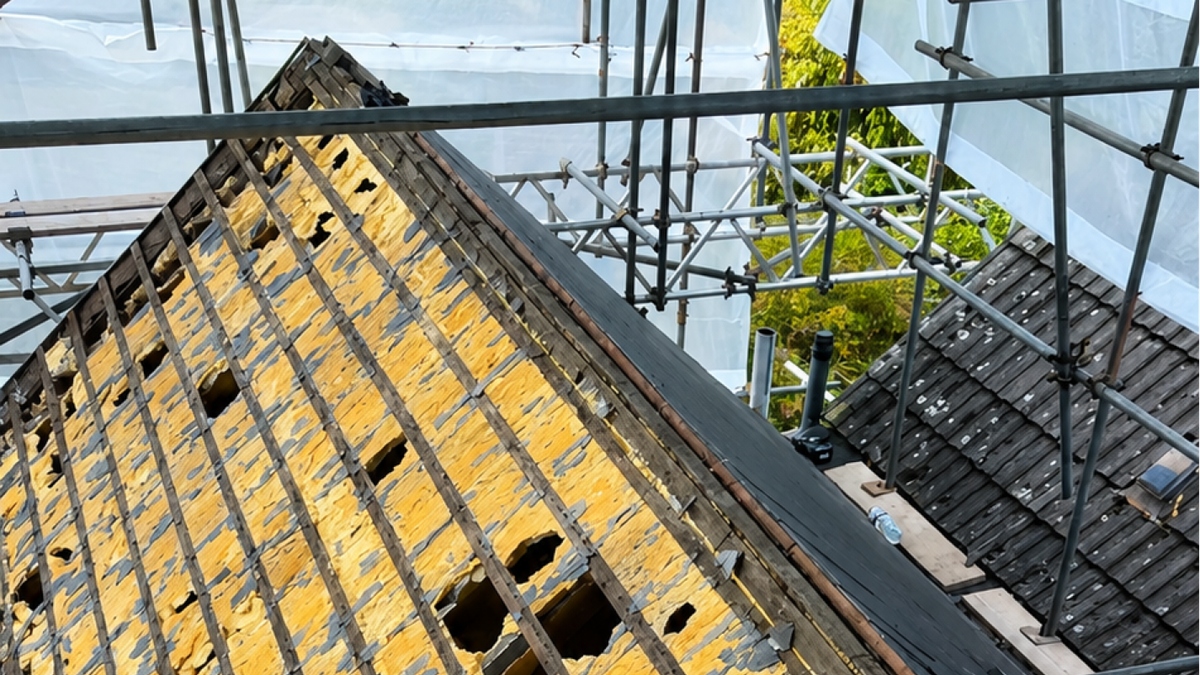
Spray foam removal means stripping polyurethane insulation off the underside of a roof so the rafters, battens, felt and ventilation paths underneath can be seen and assessed again. There is one main reason homeowners have it done. Foam bonded to roof timber makes that timber impossible to inspect, and timber nobody can inspect can rot away without anyone noticing. Trueline Roofing Ltd removes spray foam and re-exposes roof structures for homeowners across Poole, Bournemouth, Swanage, Wareham, Weymouth and Dorchester.
The short version
| Question | Answer |
|---|---|
| What is removed? | Open-cell or closed-cell polyurethane foam sprayed onto rafters, sarking felt or the underside of the tiles |
| Why remove it? | To get inspection access back, restore ventilation, and satisfy surveyors and lenders |
| Does foam cause rot? | Not on its own. Trapped moisture causes rot. Foam hides it and can block the airflow that would otherwise dry it out |
| How long does it take? | Usually 1 to 3 days on a standard house roof, depending on foam type, thickness and how well it has bonded |
| What happens afterwards? | A full inspection of rafters, ventilation paths and roof covering, plus a written condition report |
| Areas covered | Poole, Bournemouth, Swanage, Wareham, Weymouth, Dorchester and the surrounding Dorset area |
What is spray foam insulation, and why is it removed?
Spray foam insulation is a polyurethane product applied as a liquid that expands and cures against the underside of a roof. It was sold widely to UK homeowners as a retrofit measure to cut heat loss, and in a lot of Dorset properties it went straight onto the rafters and the back of the roof covering.
The material itself is not really the issue. The issue is what it does to a roof that was built as a ventilated cold roof, which covers the vast majority of pitched roofs in this county. That design depends on air moving in at the eaves, through the loft and back out again. It also depends on the roof timbers staying visible, so problems get spotted while they are still small. Foam interferes with both of those at the same time.
Open-cell versus closed-cell foam
The two types behave quite differently, so working out which one you have is the first thing we do on site.
| Attribute | Open-cell foam | Closed-cell foam |
|---|---|---|
| Structure | Soft and sponge-like, cells interconnected | Rigid and dense, cells sealed |
| Vapour behaviour | Vapour-permeable, so moisture can pass into it | Vapour-resistant, so it acts as a vapour barrier |
| Typical failure mode | Absorbs moisture and holds it against the timber | Traps moisture behind it, out of sight |
| Bond to timber | Moderate, and often removable in sections | Strong, and usually needs cutting and scraping |
| Removal difficulty | Lower | Higher, with more labour and more care needed to protect the rafters |
Neither type is automatically safe or automatically a problem. What matters is whether the roof it went into can still breathe, and whether the timber underneath can still be checked.
Can spray foam hide rotten rafters?
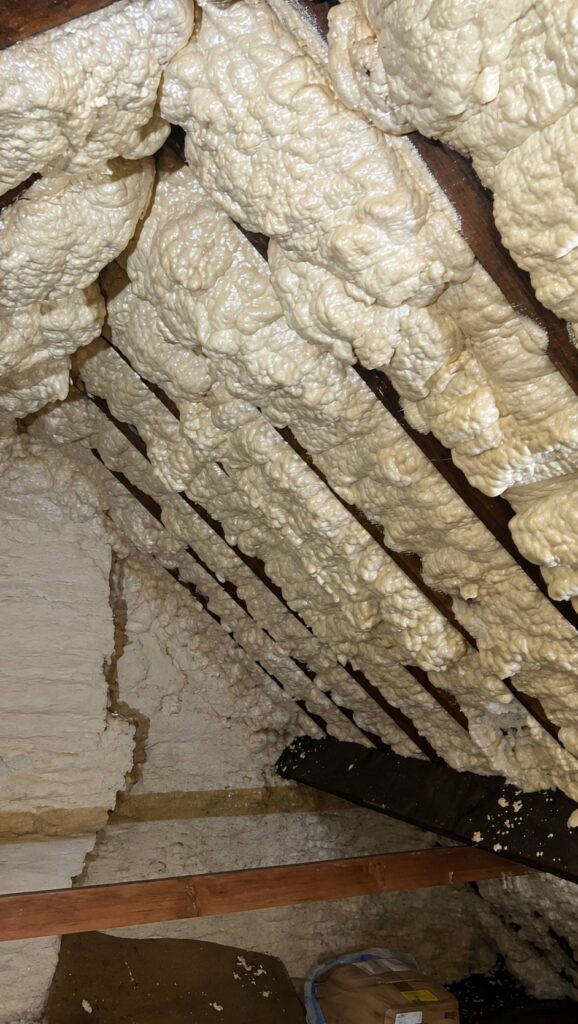
It can, though it is worth being clear that the foam is concealing the decay rather than causing it.
Rafters are the main structural members of a pitched roof, and in a normal loft they are fully visible. A homeowner or a surveyor can look up and see staining, softening, fungal growth, insect damage or splits. Once foam covers them, that check is gone.
Things that can develop unseen behind foam include:
- Soft or spongy timber where the moisture content has stayed high
- Dark water staining running down from a leak point
- Wet rot and dry rot
- Persistent damp at the eaves and wall plate
- Old leaks that were never traced or repaired
- Woodworm and other insect activity in damp timber
- Cracking, splitting or failed joints and connections
Some of this shows at the edges of the foam if you know what you are looking for. Most of it does not, which is why removal is the only reliable way to find out.
How does spray foam affect roof ventilation?
A ventilated cold roof works by letting air in at the eaves and out at the ridge or high level. That airflow carries away water vapour rising from the rooms below, which comes from cooking, washing, drying clothes indoors and simply breathing.
When foam blocks the eaves gap or seals the tile joints, that air stops moving. Warm, humid air then sits against the colder surfaces inside the roof and condensation forms on them. Condensation that never gets a chance to dry out is behind most of the timber decay we find after a removal job.
Ventilation has to be assessed as a system rather than as one component. In a Dorset roof, the airflow route depends on:
- The eaves gap. A clear intake above the wall plate, commonly 10mm or 25mm continuous.
- Cross-flow. Air moving freely across the loft void without obstruction.
- A high-level outlet. Ridge vents, tile vents or slate vents letting warm air escape.
- Cold bridges. Points where warm surfaces meet cold ones, where condensation forms first.
- Vapour control below. How much moisture is entering the roof from the rooms underneath.
Interrupt any one of those and the roof stops performing the way it was built to.
Moisture is the real cause, not the foam
It is worth saying plainly that spray foam does not automatically mean rotten timber. Softwood roof timber can stay sound for a century as long as it stays dry. Decay starts when the moisture content stays high for long periods.
The moisture sources we find behind foam are ordinary roofing faults:
- Slipped, cracked or porous tiles and slates
- Failed lead flashing at chimneys, abutments and valleys
- Blocked or overflowing gutters soaking the eaves
- Condensation caused by restricted ventilation
- Leaking roof windows and badly sealed penetrations
- Plumbing and tank leaks in the loft
- Perished sarking felt that no longer sheds water
What the foam does is make those faults hard to find and hard to trace. Water rarely shows up directly beneath the defect that caused it. It travels along rafters and felt before it becomes visible, and in a foam-covered roof there is nowhere to follow the trail.
How we remove spray foam: our 7-stage process
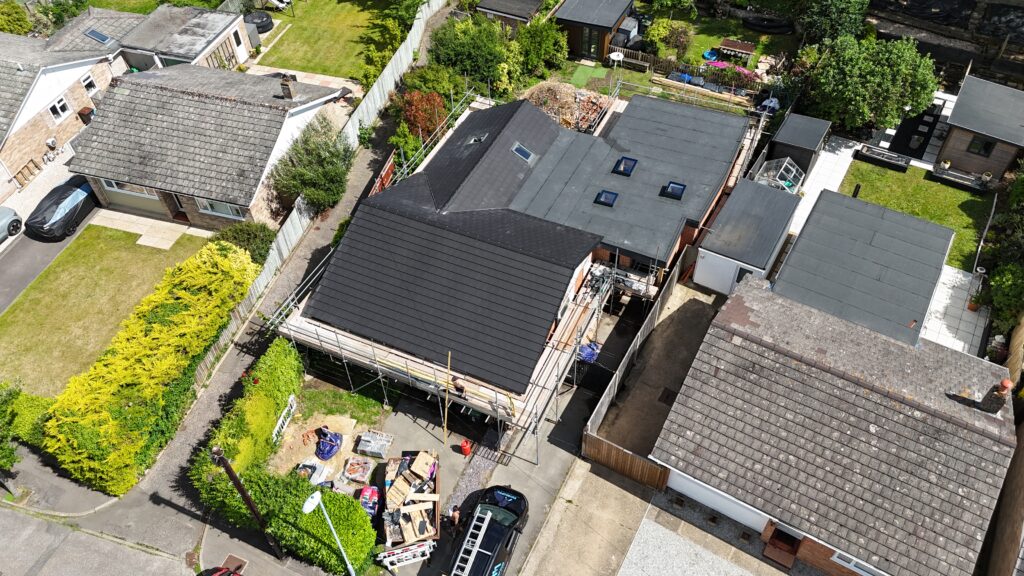
1. Roof inspection and foam identification
Before anything gets touched we survey the roof space to work out what we are dealing with:
- The foam type, open-cell or closed-cell
- How much has been applied, and how thickly
- Whether it is bonded to the rafters, the felt, or directly to the tiles
- Visible timber condition and any moisture staining we can reach
- What ventilation exists at the eaves and ridge
- Anything structural that would change our method
No two Dorset roofs are the same, so the survey decides the removal method rather than the other way round.
2. Safety preparation and site protection
Foam removal creates dust, debris and airborne particulate in a confined space, so before work starts we put in place:
- Safe, boarded access to the loft
- Protective sheeting on floors, stairs and access points
- Full PPE, including respiratory protection, eye protection and gloves
- Task lighting across the working area
- Isolation checks on exposed cabling, downlights and junction boxes
3. Controlled mechanical removal
Removal is mechanical and deliberately slow. Depending on how well the foam has bonded, we use:
- Manual scraping and sectional cutting
- Layer-by-layer reduction rather than pulling it off in bulk
- Careful separation at the rafter face to protect the timber fibre
- Controlled work around felt, wiring and services
Pulling foam off aggressively damages rafters and tears sarking felt. The aim is to expose the structure and leave it in the condition we found it.
4. Waste collection and loft clearance
Cured polyurethane foam is not household waste. We bag it as it comes off, take it out of the property as we go, and dispose of it through licensed waste routes. Keeping the loft clear is also practical, because you cannot inspect a roof when you cannot see the floor of it.
5. Post-removal structural inspection
This is the stage the whole job exists for. With the timber exposed we assess:
- Rafters, purlins, wall plates and ceiling joists for decay
- Water staining, and which direction it has travelled
- Fungal growth, mould, and active wet or dry rot
- Timber strength, softness and any loss of section
- Splits, cracks and failed joints or connections
- Insect attack in timber that has previously been damp
Where we find deterioration, we trace it back to the moisture source rather than just treating the symptom.
6. Ventilation and moisture assessment
With the roof open we then look at the airflow and moisture picture:
- Eaves intake, whether it is clear or blocked
- Cross-ventilation through the void
- High-level outlets at the ridge or through tile vents
- Moisture readings in any suspect timber
- Cold spots where condensation is forming first
7. Written report and recommendations
You get a clear account of what your roof actually is, covering:
- Structural condition of the rafters and supporting timbers
- Any timber deterioration found, with location and extent
- Evidence of leaks, condensation or old water ingress
- Repairs needed, and the order to do them in
- Ventilation improvements to stop the problem coming back
- Reinsulation options suitable for a ventilated cold roof
We would rather give you an honest report than a reassuring one.
Warning signs your foam-insulated roof needs attention
If your property has spray foam, these are the signs worth acting on:
- A musty, earthy smell in the loft
- Damp, dark or cold-to-touch timber at the edges of the foam
- Water staining on rafters, felt, or the ceiling below
- Visible mould or fungal growth
- Condensation droplets on the underside of the covering
- Still, stale air with no draught you can feel at the eaves
- Foam that has shrunk, cracked, discoloured or come away from the timber
- Slipped or missing tiles you can see from ground level
- Ceiling stains that appear after heavy or driven rain
Any one of these is worth an inspection. Several of them together means you should book one soon.
What happens if rotten rafters are found?
Finding decayed timber does not mean you need a new roof.
What we do depends on how far it has gone:
- Localised decay. The affected section gets cut out and spliced, or we fix a sister rafter alongside the sound timber.
- Several rafters affected. Sections of the roof structure are repaired or replaced, usually at the same time as recovering that slope.
- Widespread structural loss. A full structural repair or a roof replacement is the honest answer, and we will say so.
Whichever it is, two things need to happen together. Repair the timber, and deal with the cause. Replacing a rotten rafter under a roof that still leaks, or under a loft that still cannot ventilate, just resets the clock.
Does spray foam affect mortgages and selling your home?
This is one of the most common reasons Dorset homeowners get in touch with us.
If a surveyor cannot inspect the roof timbers, they cannot certify their condition. What usually follows is a caveat in the report and a recommendation for further investigation. Lenders and their valuers tend to treat that uncertainty cautiously, and sales can stall while it gets sorted out.
Removing the foam solves the access problem. It does not, by itself, guarantee a clean bill of health, and that distinction matters. If removal turns up decay, poor ventilation or an active leak, those findings need resolving and documenting. A roof with a written repair history puts you in a much stronger position in a sale than a roof nobody has been able to look at.
Spray foam removal across Dorset
Roof construction, exposure and housing stock vary a fair bit across the county. Our method stays the same. What changes is what we expect to find.
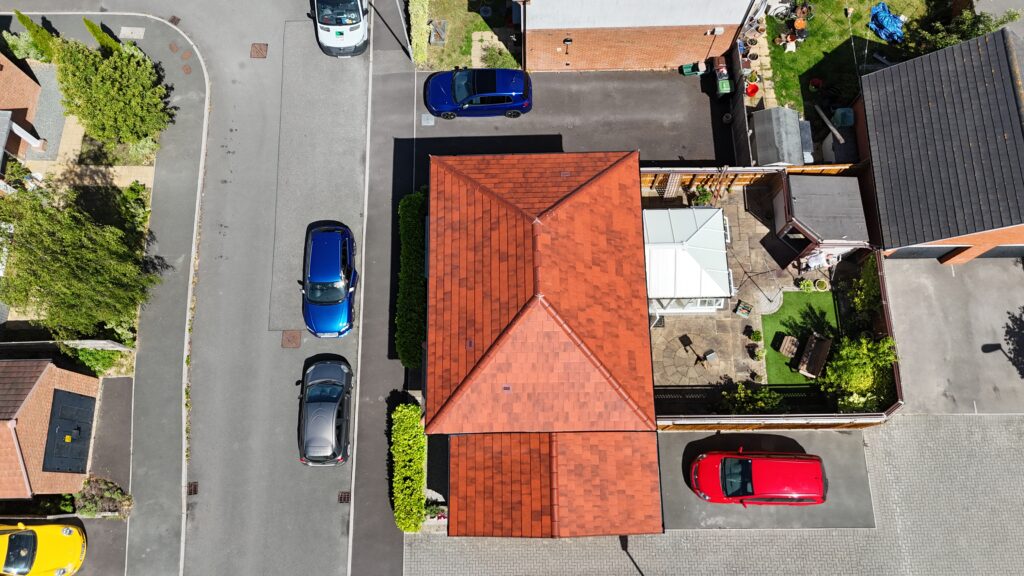
Spray foam removal in Poole
Poole’s housing stock is mostly interwar and post-war semis and detached houses, with big 1960s to 1980s estates and a lot of bungalows and chalet bungalows. Two things shape what we find here.
Chalet bungalows and loft conversions give you room-in-roof construction, where foam has often been sprayed into shallow voids with very limited ventilation and almost no access. These are the roofs where concealed condensation damage turns up most often, and they need the most careful removal.
Then there is the harbour. Being close to Poole Harbour means persistently high humidity, so a roof that would be only marginally under-ventilated inland can be actively wet on a harbourside property. On Poole roofs we treat eaves ventilation as a priority rather than an afterthought.
Spray foam removal in Bournemouth
Bournemouth has a high concentration of Victorian and Edwardian villas, many of them subdivided into flats and HMOs, alongside large areas of interwar suburban housing. Two things follow from that.
Older villa roofs are frequently natural slate on close-boarded or battened construction, with complicated geometry: turrets, dormers, multiple valleys and deep parapet gutters. Foam applied over that geometry hides exactly the junctions where leaks start. The work is slower here, and the flashing and valley inspection afterwards takes longer.
Converted properties also generate far more internal moisture per roof than a single household does. Where several kitchens and bathrooms sit under one loft, a blocked ventilation path shows up as condensation fairly quickly. In Bournemouth conversions we routinely find that the ventilation was never uprated to match the change of use.
Spray foam removal in Swanage
Swanage sits on the Isle of Purbeck and the roofs show it. Traditional Purbeck stone slate, natural slate and older clay tile are all common, much of it on historic cottages and buildings inside conservation areas.
Two issues dominate. Stone slate and older natural slate roofs are heavy, hand-sorted coverings laid to diminishing courses, and foam sprayed onto their underside bonds to the slate itself and to the pegs or nails holding it. Removal has to protect the covering as well as the rafters, because these slates are expensive and often impossible to replace like for like.
The second issue is exposure. Swanage roofs take direct, salt-laden south-westerly weather off the Channel. Wind-driven rain gets through coverings that would be watertight inland, and foam then holds that water against the timber instead of letting it drain and dry. After removal, we pay particular attention to nail sickness and corroded fixings.
Spray foam removal in Wareham
Wareham is a historic market town with a good number of listed and pre-Victorian buildings inside the Saxon walls, plus thatched and stone properties in the surrounding villages. It also sits between the Frome and the Piddle on low-lying ground with a known flood record.
The listed-building side is the first consideration. Where a property is listed or sits in a conservation area, both the removal and any repair or reinsulation afterward may need consent. Historic roof structures are hand-cut, irregular and sometimes built with reused timber, so they need a gentler removal method than a modern trussed roof.
The second consideration is groundwater and ambient humidity. Properties on the floodplain carry a higher baseline moisture load through the whole structure, and when the roof above that cannot ventilate, the drying capacity that would normally cope simply is not there.
Spray foam removal in Weymouth
Weymouth combines Georgian and Victorian seafront terraces with a lot of twentieth-century suburban housing, and its roofs are among the most weather-exposed in the county.
Terraced roofs bring shared structures with them: party walls, continuous roof planes, parapet and box gutters, and abutment flashings between neighboring properties. Foam applied under a terrace roof commonly hides failures at the party wall junction, and water getting in there can affect more than one house. Working out where the water is actually coming from is a bigger part of the job in Weymouth than almost anywhere else we work.
Salt exposure is the other factor. Airborne salt speeds up corrosion of nails, clips and flashing fixings, and salt-contaminated timber holds atmospheric moisture instead of releasing it. Timber that has been sat under foam in that environment needs moisture readings, not just a look.
Spray foam removal in Dorchester
Dorchester’s stock runs from Victorian brick and stone terraces through mid-century estates to substantial modern development including Poundbury, so the roofs range from hand-cut rafters to modern trusses with breathable membranes.
Modern roofs create a specific problem. Where foam has been sprayed onto a breathable sarking membrane, it defeats the membrane completely. The membrane can no longer pass vapour outwards, and the whole assembly stops working the way it was designed to. Getting foam off a membrane roof without tearing the membrane takes a different technique to getting it off felt or bare boards.
Being inland, Dorchester roofs avoid the salt exposure of the coastal towns, but they sit on exposed chalk downland with very little shelter from prevailing wind and driving rain. The failure we see most here is condensation from blocked ventilation rather than water coming in from outside, and that is exactly the sort of failure that stays invisible until the foam comes off.
Surrounding areas covered: Christchurch, Ferndown, Wimborne Minster, Blandford Forum, Bridport, Sherborne, Portland, Corfe Castle, Upton, Broadstone and the wider county.
Why homeowners choose Trueline Roofing Ltd
We treat spray foam removal as a roofing job rather than a stripping-out job. The insulation is one part of a system that also includes the covering, the flashings, the ventilation and the timber, and taking one part out without assessing the rest is not a service worth paying for.
What that means on site:
- We survey the roof before quoting, not after starting
- Removal is mechanical and controlled, protecting both timber and covering
- Every job ends with a written condition report on the exposed structure
- We report what we find, including when there is nothing wrong
- Repairs, ventilation upgrades and recovering can be done by the same team
If your roof turns out to be sound, we will tell you that. If it does not, you will know exactly what is wrong, where it is, and why it happened.
Frequently asked questions
Does spray foam always cause roof rot? No. Foam does not cause decay by itself. Decay is caused by timber staying wet. Foam contributes when it blocks the ventilation that would otherwise dry the roof out, and it makes any decay that does occur very hard to spot.
How long does spray foam removal take? Most standard house roofs take one to three days. Closed-cell foam, thick applications and awkward access all push that up. Room-in-roof and chalet bungalow constructions usually take longer than an open loft of the same size.
Will removal damage my roof? Controlled mechanical removal is done specifically to avoid that. Some superficial marking of rafter faces and patches of aged felt is normal. Where foam has bonded to an old or fragile covering, we agree the approach with you before we start.
Can spray foam be removed without scaffolding? Loft-side removal is usually done from inside. You need scaffolding where the roof covering has to be lifted, where the felt has failed, or where repairs and recovering follow the removal.
Will removing spray foam fix a mortgage problem? It removes the inspection barrier, which is normally the obstacle. Whether the roof then satisfies a lender depends on what the inspection finds and whether any defects get repaired and documented.
What insulation should replace it? In a ventilated cold roof, insulation belongs at ceiling level, typically mineral wool laid between and over the joists, with the loft void left ventilated above it. The right specification depends on your roof construction and gets confirmed after inspection.
Do you remove both open-cell and closed-cell foam? Yes. We identify the type at survey stage and pick the removal method to suit.
Arrange a spray foam roof assessment in Dorset
If your property has spray foam insulation and you are worried about hidden damp, restricted ventilation, rotten rafters or an upcoming sale, the first step is finding out what is actually up there.
Trueline Roofing Ltd. Spray foam removal and roofing across Poole, Bournemouth, Swanage, Wareham, Weymouth, Dorchester and the surrounding Dorset area.
Contact Trueline Roofing Ltd to arrange an assessment
Hidden roof problems do not stay hidden forever. They just stay unrepaired for longer.