Emergency Roofing in Dorset
Urgent issue? 24/7 callouts for leaks & storm damage.
Urgent issue? 24/7 callouts for leaks & storm damage.

A roof protects far more than the rooms below it. It keeps water away from insulation, timber, ceilings, wiring, and internal finishes. Once part of the system fails, moisture can travel well beyond the original defect.Coastal weather makes careful maintenance particularly relevant in Bournemouth. Wind-driven rain reaches weak joints, while exposed tiles and metal details face repeated salt and moisture. Experienced roofers in Bournemouth should therefore inspect the whole affected area before recommending work. Good roofing Bournemouth service begins with finding the cause, not covering the first visible crack.
A leaking roof is rarely as simple as it appears. Water may enter beside a chimney, move along a rafter, and finally stain a ceiling several metres away. Replacing one nearby tile will not solve the problem if the true fault sits higher up.
Local roofers know the varied housing found across Westbourne, Boscombe, Northbourne, and Winton. They understand how coastal exposure affects ridge tiles, lead flashing, gutters, and roofline materials. That knowledge helps them narrow down likely causes without relying on guesswork.
Reliable roofing services should protect the building as a complete structure. Before approving roof repairs, the roofer should check surrounding coverings, drainage, ventilation, and internal signs of moisture.
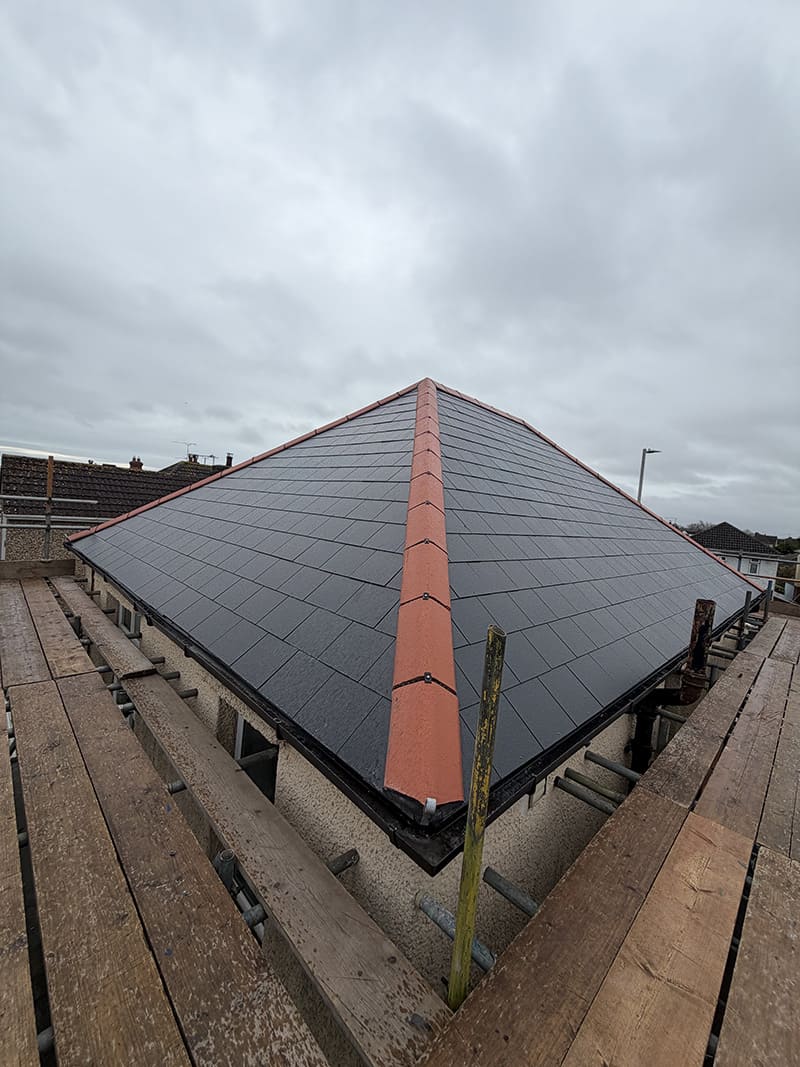
Different roof designs develop different faults. Pitched roofing may suffer from slipped coverings, cracked mortar, failed valleys, or damaged flashing. A flat roof is more likely to develop problems around seams, outlets, edges, or areas where rainwater collects.
Commercial properties bring another set of requirements. Access may need careful scheduling, and waterproofing work must often continue without interrupting customers, staff, or tenants.
- A complete roofing service may include:
- Roof inspections for wear, leaks, storm damage, and ageing materials
- Roofing repairs to tiles, membranes, joints, valleys, and roofline sections
- New roof projects and re-roofing for extensively worn structures
- Guttering, fascias, soffits, and chimney repairs
- Flat roofing for garages, extensions, shops, and larger buildings
These services often overlap. Failed guttering can soak a fascia board, damage the soffit, and stain the wall below. Repairing only the gutter may restore drainage, but it will not reverse decay that has already spread into adjoining materials.
Emergency repairs require a quick response, although speed should not replace proper diagnosis. The first visit normally has two purposes: stop further water entry and establish what permanent work will be required.
Leak detection starts with the evidence inside the property. The location, shape, and timing of a damp patch can help narrow the search. From there, the roofer may check slipped tiles, valleys, lead work, roof penetrations, and seals around a skylight. On flat roofs, particular attention goes to laps, perimeter trims, outlets, and standing water.
Roofing repair services should provide more than a temporary patch. The customer should understand:
- Where the water probably entered
- Which materials have been affected
- Whether temporary protection is necessary
- What permanent roof repair is recommended
- Whether nearby sections show similar wear
A temporary covering may be sensible during severe rain or high winds. It should still be followed by a planned repair once conditions allow safe work.
Targeted repairs make sense when the defect is isolated and the surrounding structure remains sound. Replacement becomes more practical when leaks recur in different places, underlay has deteriorated, or large areas of covering are approaching the end of their useful life.
A new roof also allows older design faults to be corrected. Poor ventilation, inadequate drainage, weak junctions, and unsuitable previous repairs can all be addressed while the covering is removed.
For pitched roofing, the specification may include membranes, battens, tiles or natural slate, ventilation components, and new lead flashing. Each layer must support the next. Premium tiles will not compensate for poorly spaced battens or weak work around valleys.
Before approving new roofing, ask for a written quotation that identifies:
- The sections being removed and replaced
- The materials and installation method
- Scaffolding, site protection, and waste disposal
- Work around chimneys, valleys, ridge tiles, and roofline edges
- Workmanship and manufacturer guarantees
A low initial price can become expensive when essential details have been omitted. Comparing the complete scope gives a more accurate picture than comparing totals alone.
Flat roofing depends on accurate falls and careful detailing. Even a small installation error can direct water toward a wall or leave it sitting against a seam. Changes in temperature then place repeated stress on joints and perimeter trims.
Common flat roof options include EPDM and single ply membranes. EPDM is flexible and often used on garages and domestic extensions. Single ply may suit larger areas where controlled seams and consistent detailing are required.
Material choice is only part of the decision. A flat-roof system also depends on the deck, insulation, vapour control, outlets, upstands, and the connection with nearby pitched roofs or walls. If one part is defective, laying another surface over it may hide the problem rather than solve it.
Where a flat roof has failed repeatedly, stripping it back and rebuilding the full system may provide better value than paying for another short-lived repair.
Chimneys create several possible paths for rainwater. Pointing can loosen, flaunching around the pots can crack, and flashing may pull away from masonry. Chimney repairs should therefore assess the stack and surrounding roof together.
Proper leadwork allows for movement while directing water safely over the roof covering. Sealant smeared over a failed joint is not an equivalent replacement for correctly formed lead work. It may last through a dry spell, then separate when temperatures change.
Careful chimney repair can prevent moisture from reaching roof timbers, loft insulation, and internal plaster. On older homes, it can also preserve original materials that remain serviceable.
Roofers in Bournemouth commonly work across Southbourne, Christchurch, Ferndown, Wimborne, Ringwood, Verwood, Broadstone, Parkstone, and Poole. Familiarity with these areas helps when assessing property age, access, exposure, and the roof designs commonly used in each district.
A professional roofing contractor should carry suitable public liability insurance and follow safe working practices for high-level residential jobs. NFRC membership may offer another useful point to check, although customers should still examine the quotation, insurance cover, guarantees, and recent work.
Homeowners tend to notice reliability through ordinary working habits:
Calls are returned when promised
Survey appointments are kept
Photographs support the diagnosis
Pricing identifies inclusions and exclusions
Waste is cleared at the end of the job
These details provide better evidence than broad claims about being the best roofing company in the area.
If you are looking for trusted roofing contractors for a new roof installation in Dorset, contact Trueline Roofing Ltd today.
Our friendly team is happy to arrange a free site survey, discuss your roofing requirements and provide a no-obligation quotation for your project.
© Trueline Roofing Ltd 2026. All rights reserved.